The Wolfram Solution for Electrical Engineering
Perform sophisticated image and signal processing, design and analyze control systems and create interactive models—all in one system, with one integrated workflow.
Underlying the Wolfram electrical engineering solution are advanced random processes including Markov chains and queueing processes, industrial-strength Boolean computation and high-performance dense and sparse linear algebra algorithms, all combined with the reliability of powerful symbolic and numeric computation.
- The Wolfram Edge
- How Wolfram Compares
- Key Capabilities
Wolfram technologies include thousands of built-in functions that let you:
- Apply filters and signal analysis to audio, image or other data
- Automatically create PID controllers to meet your design criteria
- Perform advanced 2D and 3D volumetric image processing
- Model electrical power distribution systems
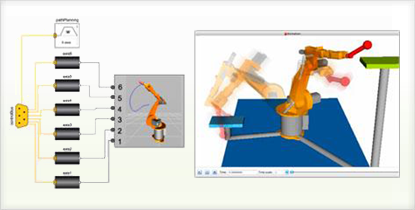
- Design and simulate human interface devices and electronic systems with mechanical subassemblies and control units
- Analyze communication systems using continuous-time frequency domain analysis techniques
- Analyze antenna radiation patterns
- Simulate filter circuits
- Design, analyze and simulate linear and nonlinear control systems
- Use built-in machine learning capabilities
Does your current tool set have these advantages?
-
Free-form linguistic input produces immediate results without the need for syntax
Unique to Wolfram technologies -
Built-in functionality for solving local and global optimization problems, both numeric and symbolic, including constrained nonlinear optimization
Matlab requires extra-cost toolboxes -
Automatic, interactive interface construction to visualize your simulations, examine model sensitivity to parameter changes and more
Unique to Wolfram technologies -
Automated precision control and arbitrary-precision numerics produce highly accurate results
Matlab and other systems that rely on finite-precision numerics can cause serious errors due to lack of precision -
Symbolic as well as numeric calculations to manipulate numbers, equations or pieces of code, improving accuracy or creating reusable models
Matlab's built-in routines only handle numeric calculations -
Highly optimized superfunctions analyze your equations and automatically select the right algorithms to get accurate results quickly—sometimes switching mid-calculation for further optimization
Other computation systems make you analyze your equations manually to determine which function to apply—for example, to solve a differential equation in Matlab, you must correctly choose among ode45, ode23, ode113, ode15s, bvp4c, pdepe and so on, or risk wrong answers -
Excellent speeds for many different types of computations, including dense and sparse linear algebra operations
Matlab is significantly slower for many of these operations
Electrical engineering specific capabilities:
- Powerful signal processing capabilities, including digital and analog filter design, filtering and signal analysis, that can be applied to audio, image or other data »
- A complete set of window functions, commonly used for design of finite impulse response (FIR) filters, with additional applications in spectral and spatial analysis
- Broad support for random processes, including parametric processes, finite Markov processes, queueing processes, time series processes and stochastic differential equation processes
- Advanced 2D and 3D volumetric imaging processing, including pixel operations, local filtering and morphology »
- Integrated 3D surface and volume rendering
- Out-of-core technology to scale up performance for very large 2D and 3D volumetric images
- Integrated functionality for designing and analyzing linear and nonlinear control systems »
- Automatic tuning of PID controllers »
- Built-in support for more than 4,500 units–including free-form linguistic entry, conversions and dimensional consistency checking across graphics and numeric and symbolic calculations »
- Laplace, Z and discrete- and continuous-time Fourier transforms in any number of dimensions for applications in signal processing, communications, circuit design and more
- Integrated wavelet analysis with discrete and continuous transforms and high-level support for thresholding and other operations »
- Fast numerical linear algebra operations and high-performance sparse linear algebra routines enable efficient, large-scale data computations »
- Powerful local and global optimization, both numeric and symbolic, including constrained nonlinear optimization, interior point methods and integer programming »
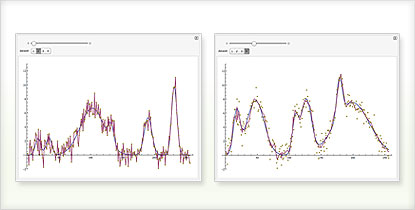
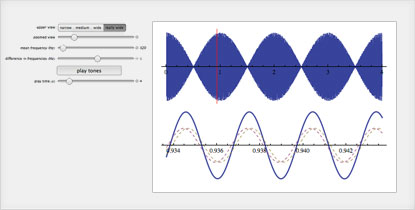
- Automatic interface construction for interactive analysis of load flow systems, signal denoising algorithms and more »
- Instant deployment of your interactive models using Wolfram Player or webMathematica
- Built-in connectivity to databases, web services, existing C++ code, Java and .NET frameworks »
- Symbolic manipulation and optimization of C code, and automatic C code generation for immediate use of standalone executables
- Load and access dynamic libraries and use built-in support for GPU computation with CUDA or OpenCL for high-speed, memory-efficient execution
Wolfram SystemModeler is the most complete physical modeling and simulation tool for high-fidelity modeling. Capabilities include:
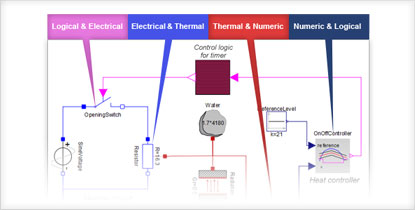
- Perform multiengineering simulation and model-based design of dynamic systems by simple drag and drop »
- Linearize a model easily
- Design and simulate real-world systems that exhibit rapid changes or discontinuities »
- Connect seamlessly with Mathematica for the ultimate integrated modeling, simulation and analysis workflow
- Connect simulations to Arduino boards to collect sensor data that interacts with modeled components »
- Deploy models with the standardized Functional Mockup Interface (FMI) for immediate use
Organizations Using Wolfram Technologies










Consulting Solutions
Enlist the world’s computation experts to help with your project—any size, any level. At Wolfram, we know what’s possible with computational technology because we are global leaders in creating it. That gives us an unprecedented depth of expertise in applying it to consulting work in a variety of fields. Whether individual or enterprise, from concept to deployment, our computation experts can help you achieve robust results with less time and effort. Get us started with your project today